
Seeding Conditions and Impacts on Emergence
June 5, 2026Spring 2026 | Quebec & the Maritimes
With spring planting, timing is everything. Risk management is an integral part of agronomic decision-making, with the timing of seeding being a key factor that must be carefully evaluated.
Early seeding, however, involves significant risks, particularly in relation to soil temperature. When soil temperatures remain below normal following planting, germination and emergence may be delayed, sometimes by several weeks. This year, in the Saint-Hyacinthe region of Quebec, nighttime temperatures remained below 10 °C between April 27 and May 16, with only one exception, creating unfavorable conditions for crop establishment.
Under these conditions, seeds absorb cold water during rehydration, which can damage cell membranes and lead to metabolic disorders affecting germination. Several situations were observed: some seeds germinated without emerging, causing leaves to open beneath the soil surface; others only initiated a root without continuing development; finally, some plants partially emerged before dying due to a lack of energy.
Seeds positioned with the germ oriented toward the bottom of the furrow were particularly vulnerable. Under normal conditions, this orientation causes a slight emergence delay of about two days. However, in cold soils, this delay can increase and raise the risk of abortion or depletion of energy reserves before emergence.
Furthermore, certain physical soil conditions, such as surface crusting or intensive tillage aimed at incorporating crop residues, can also negatively affect emergence quality. These factors often contribute to uneven emergence, gaps within rows, and in some cases, a significant reduction in plant population.
In summary, when soil temperatures remain below 10 °C for several days after seeding, germination slows and emergence is delayed. This delay increases the risk of seed reserves being depleted before reaching the surface, which can result in significant population losses.
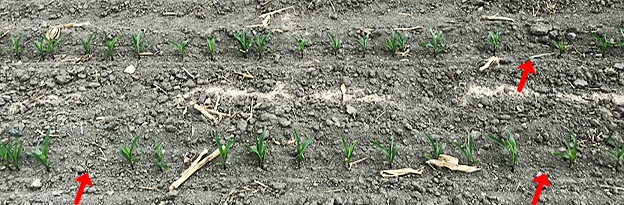

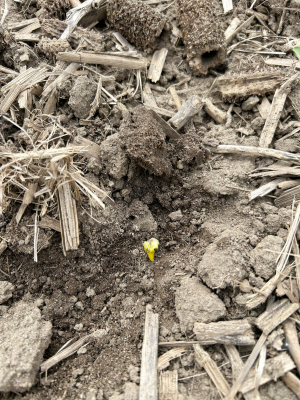
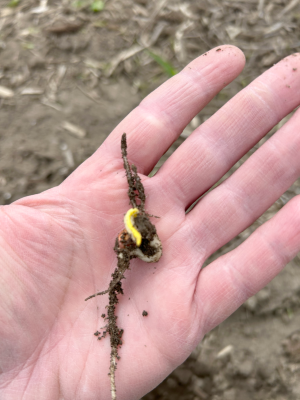
Seeds positioned with the germ oriented toward the bottom of the furrow affected by cold water absorption
Threshold for Action
Based on Table 3-17 from Agronomy Publication 811 of the OMAFRA Agronomic Guide, it is rarely profitable and effective to replant a corn field. (Please note, this table is from a French-language publication.)
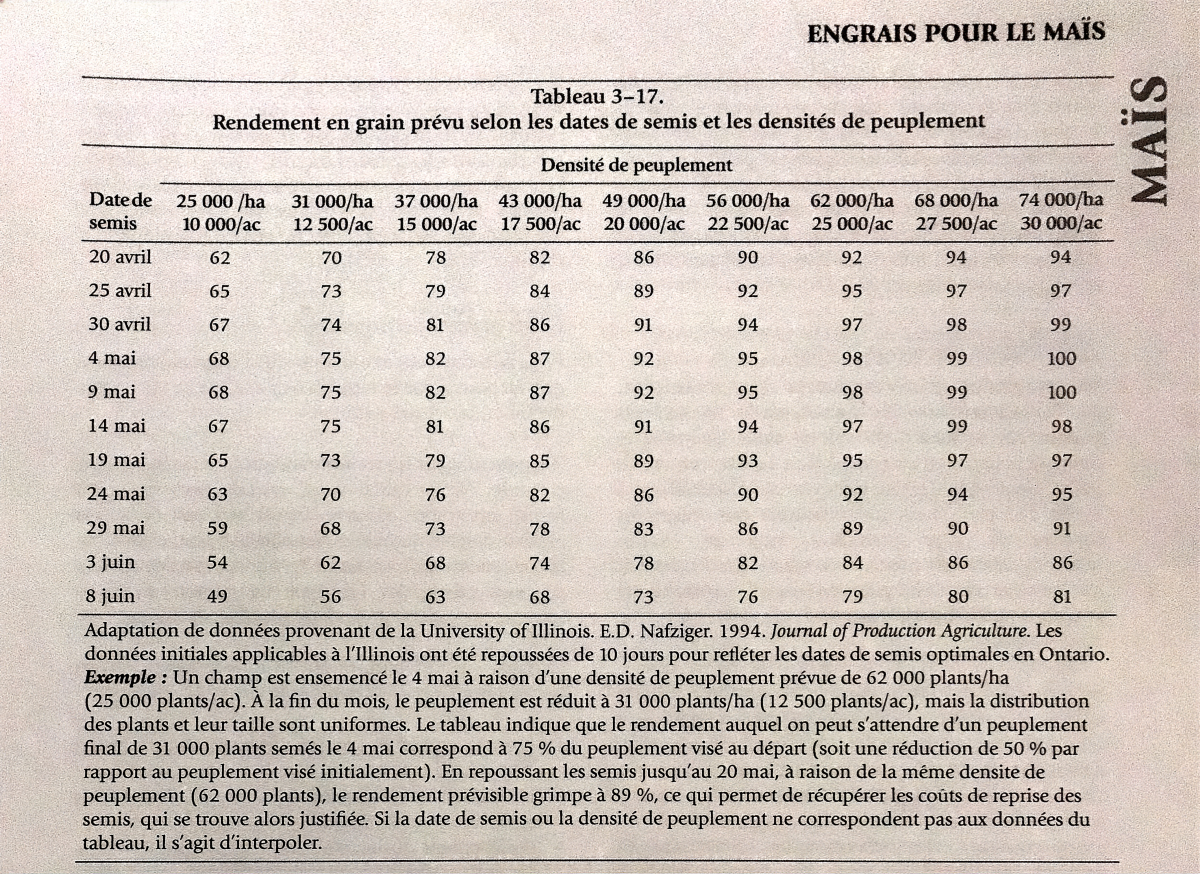
In this table, early May planting with a stand of 22,500 plants/acre has a yield potential of 95% of optimum.
Replanting at the end of May with a stand of 30,000 plants/acre shows a lower yield potential, at 91% of optimum. The replant threshold is around 20,000 plants/acre, without considering intervention costs.
If replanting is considered, prioritize soybean planting at the end of May and early June. It will be easier to manage the existing corn for weed control.
Sources:
https://www.agry.purdue.edu/ext/corn/news/timeless/CornReplant.html
Guide agronomique des grandes cultures, Publication 811 2002.
_____
Pascal Larose agr.
Product & Agronomy Lead
Quebec and the Maritimes
Maizex Seeds