
Yield, Yield, Yield. Annually growers are challenged with producing as much yield as possible in the growing season available. Seasonal variation challenges growers’ strategies to maximize yield. Hybrid selection prior…
Category: Agronomy
Maizex Moving – Early Corn Crop Uniformity Evaluation
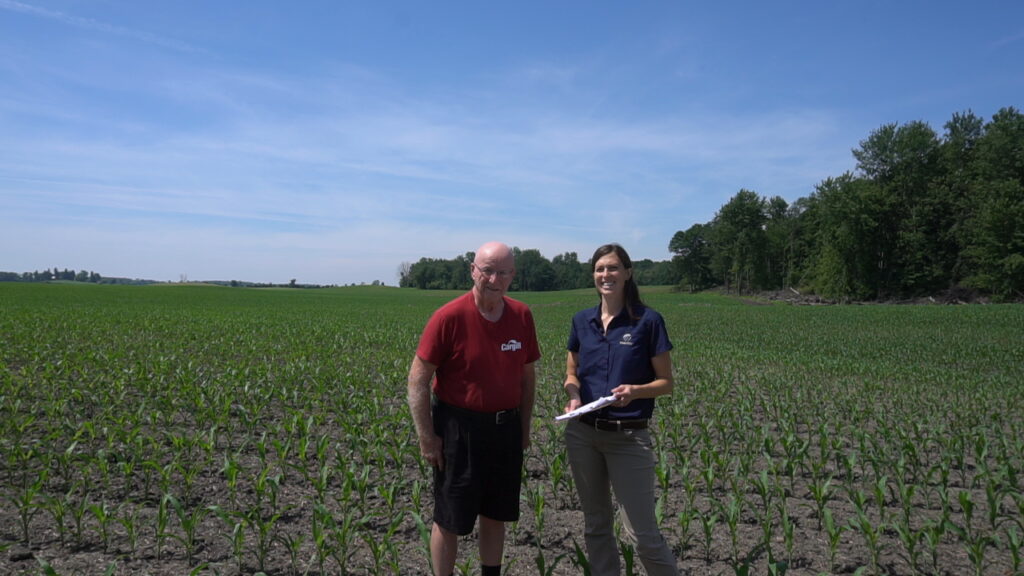
Maizex territory manager, Laura Johnston, performs an early corn crop uniformity evaluation at Durham Farms. …
Maximizing Corn Yield with your Management Toolbox
June 20, 2018 Leigh Hudson CCA-ON, Twitter- @lhudson89 Planting 2018 has wrapped up and we are on to the next step of maximizing corn yields. The majority of us know…
Maizex Moving – Planter Preparation
In this edition of Maizex moving Agronomist Greg Stewart discusses tailstock alignment and seed planting depths….
Reviewing Your Sulphur Needs for Top Yields
Overview One nutrient that you may or may not have on your radar is sulphur. Sulphur (S) deficiencies have been more prevalent throughout my travels the past couple of years,…
Maizex Moving: Uneven Corn
Maizex Territory Manager Kirk Van Will reminds you to watch for uneven corn when scouting your fields. What are the causes? Planter problems or something that occurred after emergence?…
Goss’s Wilt – What should you know…
Throughout most of the midwestern US corn belt, a disease called Goss’s Wilt can be found reducing corn yields by much as 30%. In recent years, Goss’s Wilt has been…
Corn Nodal Roots under Stress
In the past 7-10 days we have noticed corn plants leaning or flopping over. With some examination, it appears that these plants have poor nodal root development (ie. Rootless Corn…
Bean Leaf Beetle in Soybeans – Why Should We Worry?
With the introduction of Class 12 regulations, many soybeans were sold as Fungicide Only or as No Seed Treatment. There is a good possibility that we may be challenged with…
Maizex Moving: Agronomy Site Update with Adam Parker
Maizex Territory Manager, Adam Parker, is in Perth County, Ontario visiting the Market Development Plot and Agronomy Site. He discusses some of the corn research Greg Stewart will be performing…