
A Deep Dive into Seed Depth
May 19, 2026“Control the Controllable.” Growers have been hearing this phrase for years, alongside “even emergence” and “picket-fence stands.”
As it stands, corn planting depth may be one of the most important controllable factors in spring planting, since the right depth can improve the chances for those desired qualities of even emergence and picket-fence stands.
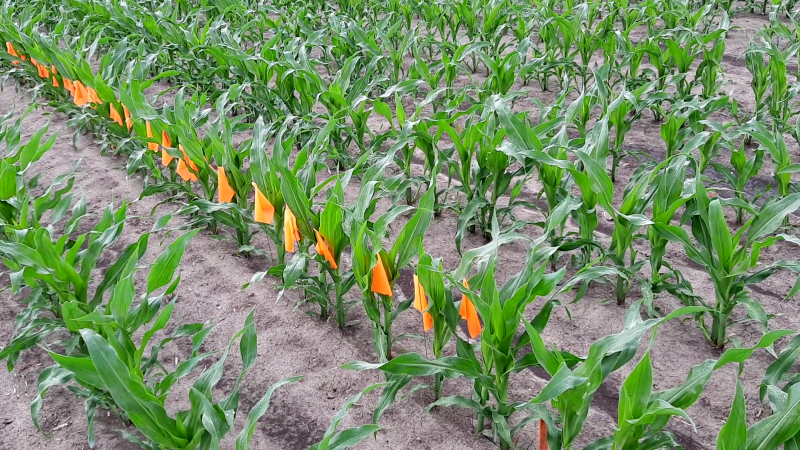
It probably doesn’t need to be said, but the ideal planting depth for corn depends to a large extent on soil moisture. The principle behind experimenting with planting deeper was to promote uniform emergence when the window for emergence was tighter, with the primary goal being to plant at a depth that maximizes the possibility of emergence in a window of 24 – 48 hours.
In 2018, Maizex Seeds began a three-year study to determine the effect of planting depth on yields (see Figure 1). In 2018 and 2019, the trial found that seeding at 3 inches instead of 2 inches resulted in slightly higher yields. However, the opposite was true in 2020.
Figure 1. Three-year results of planting depth trials, 2018 to 2020.
| Year | 2018 11 sites | 2019 27 sites | 2020 21 sites | |||
|---|---|---|---|---|---|---|
| Planting depth | 2″ | 3″ | 2″ | 3″ | 2″ | 3″ |
| Average population (ppa) | n/a | n/a | 31,173 | 32,109 | 30,181 | 30,752 |
| Average yield (bu/ac) | 207 | 208 | 204 | 208 | 212 | 210 |
| Wins (>3 bu/ac) | 27% | 36% | 7% | 44% | 33% | 24% |
The 2019 planting season was challenging in particular, as it was delayed by frequent rainfall across many parts of Ontario, and many sites were not planted until late May or early June. In 2020, planting began at the earliest site on April 28th with the last one planted on June 2nd.
At the end of the three-year study, 3″ planting proved to be better 35% of the time, 2″ planting performed better 22% of the time, and 43% of the time, they were even. Obviously, no two planting seasons are ever alike. A deeper dive into these trials reveals some insight into what happened across these three trials and why.
It’s of course imperative to recognize the different soil types at play. The 2019 trials had four planted into heavy clay, 12 into clay-loam, and 13 on loam, sandy loam, or sand. In 2020, there were 9 on clay or clay-loam soils, 7 planted to loam, and 5 on sandy-loam soils. The data shows that in early, cool conditions, the shallower planting yielded better results on average, especially on the clay and clay-loam soils.
However, when planting was delayed and the soil was warmer, yields and populations were not affected negatively by the deeper planting. Maizex agronomists noted during these trials that planting a little deeper helped to close or at least add some soil to seed trenches that were difficult to close.
The Ontario Ministry of Agriculture, Food and Agribusiness’s (OMAFA) Agronomy Guide (Publication 811) supports the findings of the three-year Maizex trials on corn planting depth. Three-inch depths are recommended when planting later in the season as soils warm and the goal is to plant to moisture. The guide notes that planting at three inches poses less risk than planting at too-shallow depths (less than two inches) to potentially benefit from rain in the forecast.
Remember you can plant too shallow. Some may want to plant at less than 2” when there is ample soil moisture, to in theory hasten the timeframe to emergence. The reality of planter physics is that regardless of how smooth a field is, there is always some planter unit bounce and variance. The result is that if planting at less than say 2”, the major risk is that some seeds could be at a half inch or less in depth, actually creating issues for both germination and uniform emergence.
In an earlier planting season, we also need to be cautious about planting too deep on clay and clay-loam soils. However, research shows that, under a wide range of other conditions, you need to be at least 2 inches deep, and if you are going to err, the risk is lower if you err on the deeper side.
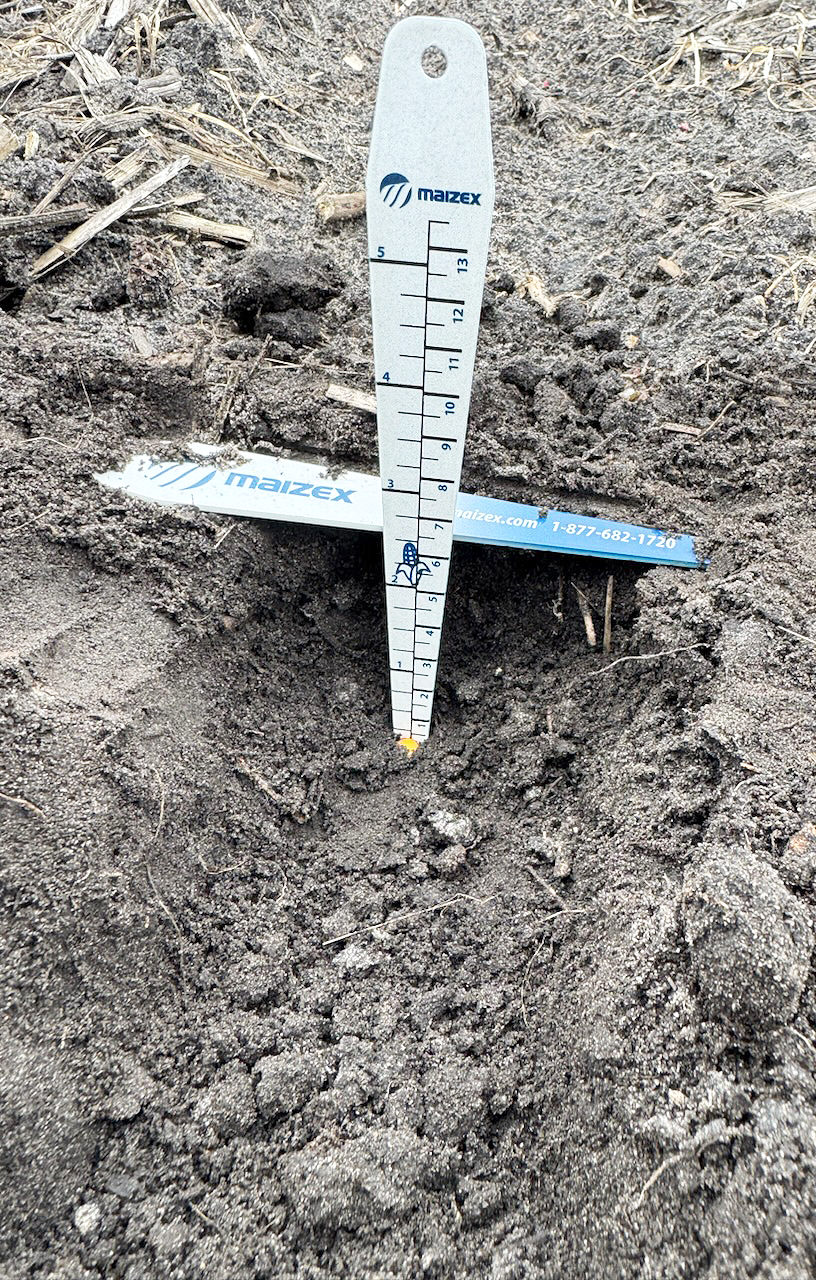
Bottom line: if you are going to err,
the risk is lower if you err on the deeper side.